
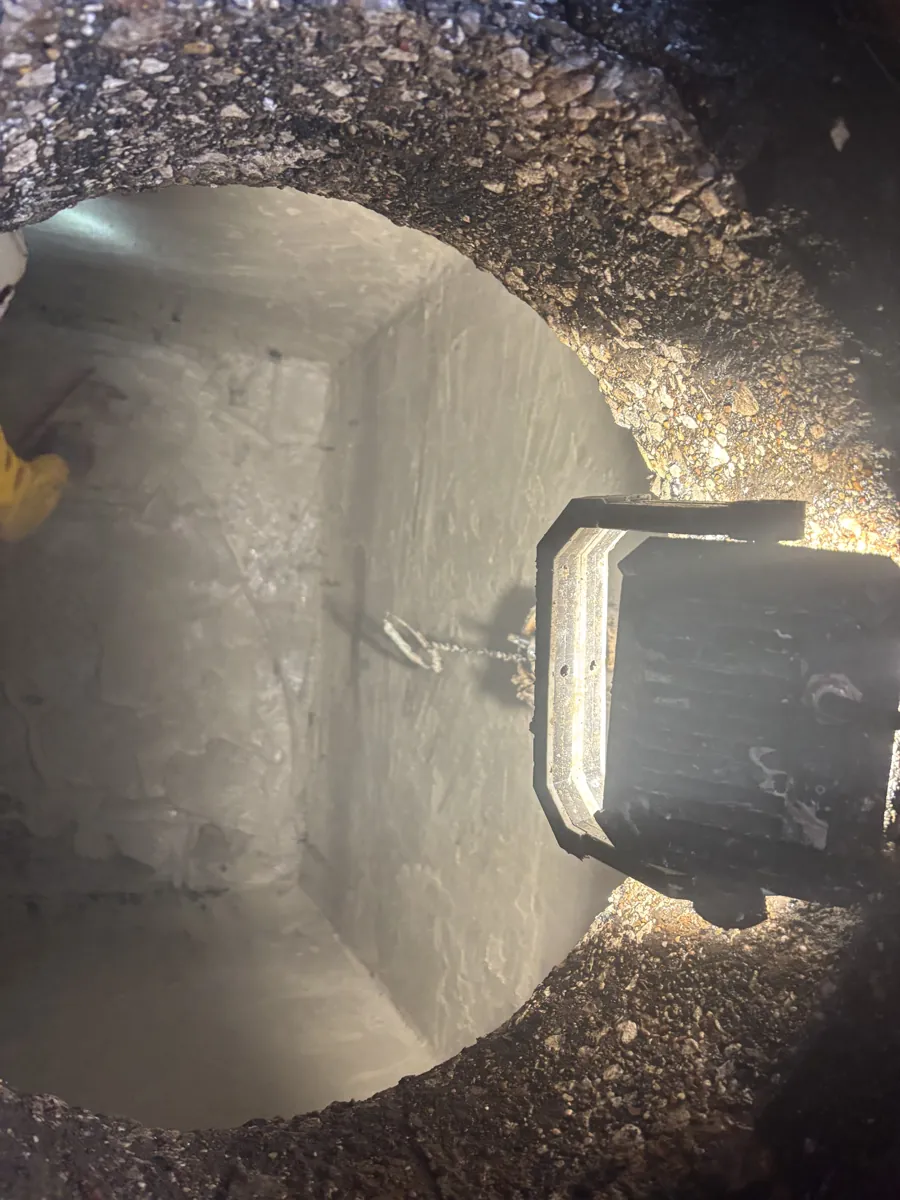
Failing doesn’t automatically mean buying a new grease trap. If the trap is damaged, ask about repair first: we fix holes, cracks, corrosion and broken baffle walls overnight, and the repaired trap is guaranteed to pass inspection.
If you’ve just failed, in short
- Note exactly what failed, and any date it has to be fixed by.
- Work out whether the problem is the schedule, the paperwork or the trap itself.
- Keep your hauler’s records together. Austin requires records to be kept for at least three years.
- If the trap is damaged, ask about repair before agreeing to a replacement.
- Move quickly. If the city has given actual notice and the problem isn’t fixed, it can sue for civil penalties, with each day counted as a separate violation.
Who inspects grease traps in Austin, and when
Austin’s grease trap rules sit in Chapter 15-10 of the City Code, the wastewater regulations, and Austin Water enforces them through its Industrial Waste staff.
The inspection happens while the trap is being serviced. Austin Water’s guidance says an Industrial Waste staff member must be present while the grease trap is being serviced, and the date is arranged with your liquid waste hauler and Industrial Waste staff.
That timing matters for a damaged trap. When an inspection does happen, the trap is being serviced and emptied, so its walls and baffle wall are visible to whoever is inspecting it.
Austin grease trap inspection: what the rules measure
This list comes from the City Code and Austin Water’s published guidance, not from an inspection form:
- Cleaned on time. At least every three months, or sooner once grease and solids reach 50% of the wetted height.
- Emptied completely. Every bit of grease, liquid, solids and residue removed each time the trap is cleaned.
- By a permitted hauler. Grease trap waste leaves with a liquid waste hauler permitted by the City of Austin.
- Records kept. The trip ticket manifests from each pump-out, kept for at least three years.
- Grease under the limit. No more than an instantaneous maximum of 200 milligrams of fat, oil and grease per liter of wastewater.
- A trap kept in working order. The approved pretreatment facility has to be constructed, operated and maintained.
- Any extra requirements. The director can set other cleaning requirements where the sewer system needs protecting.
Sources: Austin City Code, Chapter 15-10 and Austin Water’s grease trap guidance.
Why a trap that’s pumped on schedule can still fail
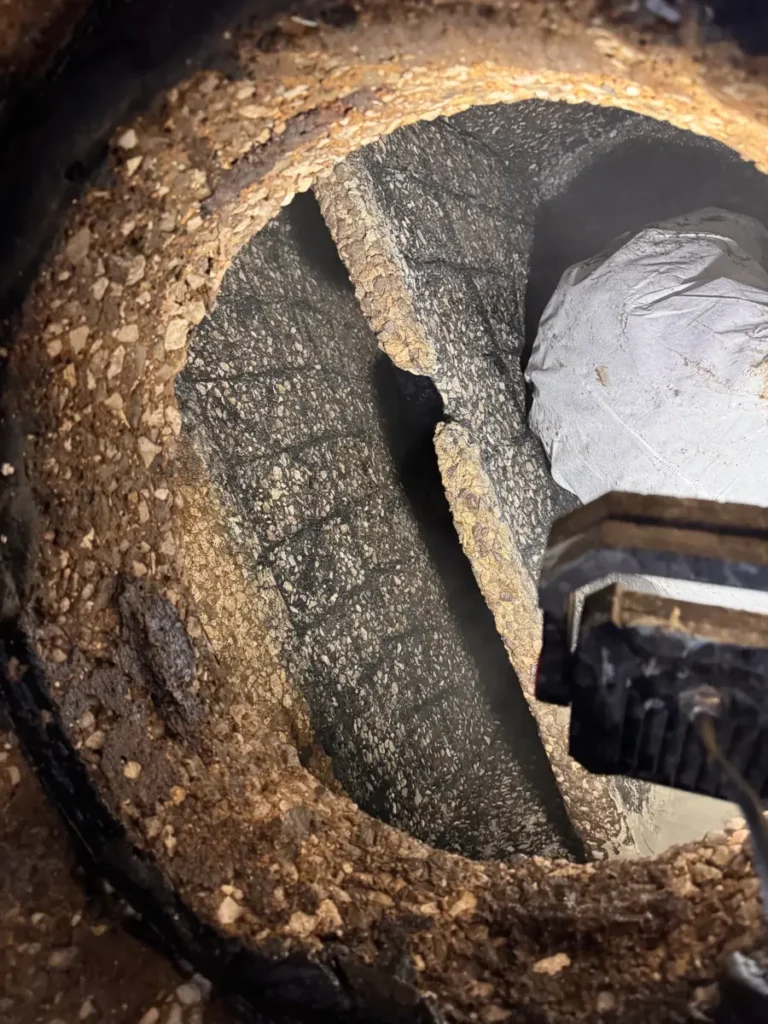
A receipt for last month’s pump-out doesn’t prove the trap works. If acid has opened holes in the walls or broken the baffle wall, the trap has lost capacity, and emptying it again won’t change that.
Pumping removes what’s inside a trap. Repair fixes the trap.
What Austin’s code allows after a violation
| What the code allows | What it means |
|---|---|
| Civil penalties | If a business has had actual notice of the chapter and breaks it, the City can sue for civil penalties of up to $5,000 a day for each violation. Each day, or part of a day, counts separately |
| Emergency suspension | If a discharge puts public health or safety in imminent danger, threatens the environment or threatens the operation of the sewer system, the director can suspend water and wastewater service and disconnect the premises |
| Service termination | After finding a violation of the chapter, a permit or an enforcement order, the director can issue an order terminating water or wastewater service to the premises |
| A published list | Once a year, the director must publish in the city’s largest daily newspaper a list of users found in significant noncompliance with pretreatment requirements during the previous 12 months |
| Stricter cleaning | The director can set other cleaning requirements where needed to protect the sewer system |
| A criminal offense | Violating the chapter is a Class C misdemeanor, and each occurrence is a separate offense. A conviction doesn’t need proof of a culpable mental state, so intent doesn’t have to be shown |
Source: Austin City Code, Chapter 15-10 (sections 15-10-251 to 15-10-311).
Losing water or wastewater service would be the hardest of these for a kitchen to work through, so it’s worth fixing a failed trap quickly rather than waiting.
What to do now, step by step
1. Find out exactly what failed
Go through whatever you were given after the inspection. Note each problem it lists and any date attached to it.
2. Sort it: schedule, paperwork or damage
A late pump-out, or grease and solids past the 50% line, means booking a permitted liquid waste hauler. Missing records mean asking your hauler for copies of the trip ticket manifests. Cracks, holes, corrosion or a broken baffle wall mean the trap needs repairing.
3. Don’t commit to a replacement yet
A damaged trap isn’t automatically a trap to throw out. In Austin, a new trap needs building plan approval and an Industrial Waste approval letter setting its size and design before it’s even bought. If the city’s finding calls for a bigger or differently sized trap, though, a new one may be the only way to meet it, and we install those too.
Before replacing a trap, read this
4. Call us
(512) 801-4131, at any hour. A person answers and books a free on-site inspection. Your hauler empties the trap, and we repair it overnight.
5. Arrange the inspection around a service
When an inspection needs scheduling, Austin Water’s guidance is to set the date and time with your liquid waste hauler and Industrial Waste staff, because the inspection happens while the trap is being serviced. We work with the city’s inspectors on any inspection a repaired trap needs.
6. Keep the paperwork
File the repair paperwork with your pump-out records. Austin’s code says records have to be kept for at least three years, and for longer during compliance litigation or when an enforcement order sets a longer period.
What a repair changes
We repair the damage itself: holes, cracks, corroded walls, broken baffle walls and the parts inside the trap. The work happens overnight, and the trap is ready the next morning.
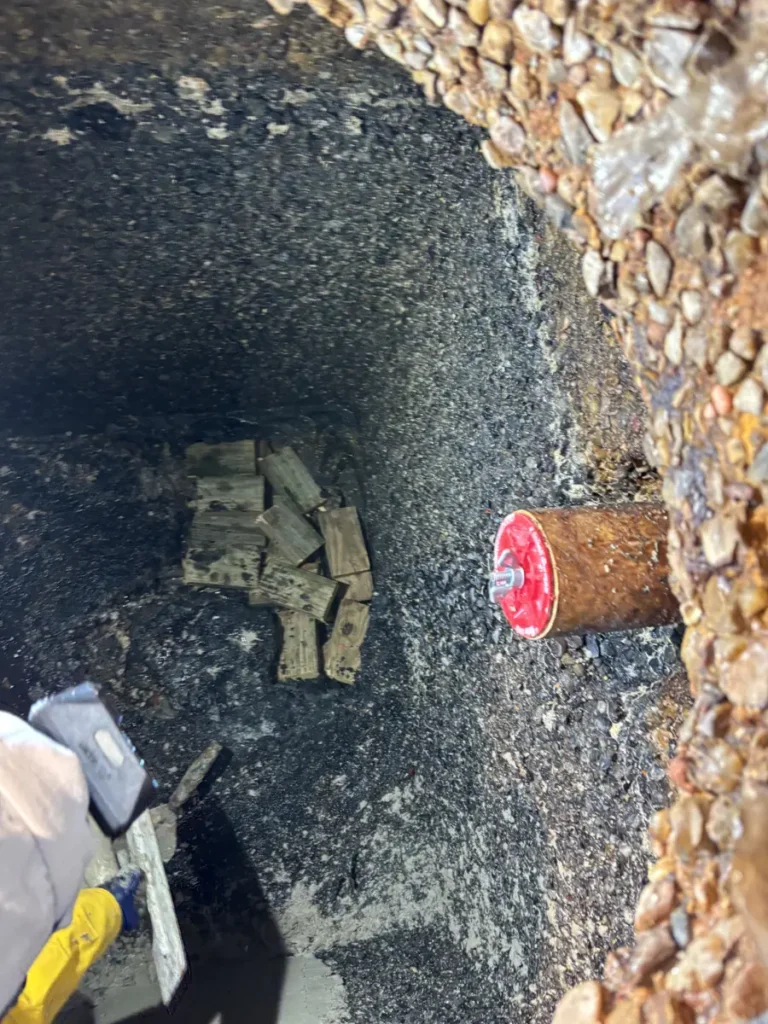
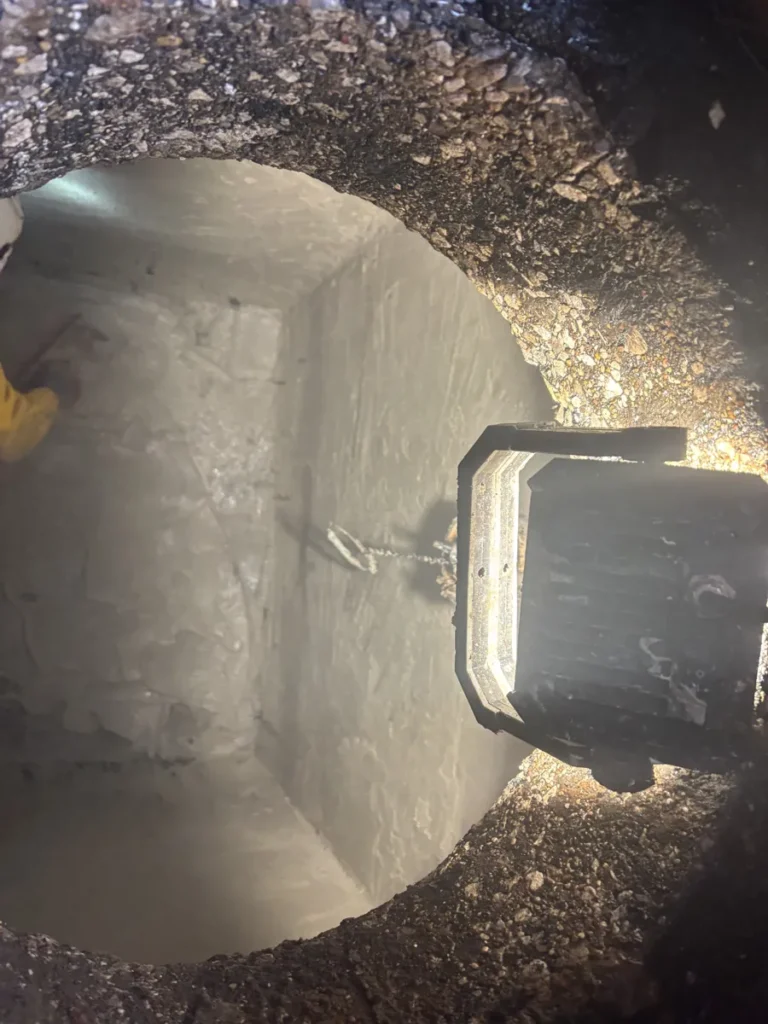
The repaired trap is guaranteed to pass inspection. We meet that by repairing with high industrial-grade materials, back to the trap’s original specifications. The guarantee is about the trap. A late pump-out, missing records or grease over the limit stay the restaurant’s own responsibility.
The repair also carries a 10-year warranty covering labor and materials, as long as the trap gets regular pump-outs on Austin’s schedule.
How a grease trap repair works
Questions after a failed grease trap inspection in Austin
The trap was pumped on time. Why did it fail?
Something else may have failed, such as missing records or grease over the limit, or the trap itself may be damaged. A trap with holes or a broken baffle wall has lost capacity. In Austin, when an inspection happens, it happens while the trap is being serviced, so that kind of damage is often visible then.
How fast can a failed trap be fixed?
The repair itself takes one night, and the trap is ready the next morning. Call at any hour, and a person books the visit.
Can Austin really cut off a restaurant’s water?
The code allows it. After finding a violation of the chapter, a permit or an enforcement order, the director can issue an order terminating water or wastewater service to the premises.
Will my restaurant’s name be published?
Only if the director finds the business in significant noncompliance, a term the code defines in detail. Once a year, the director publishes a list of those users in the city’s largest daily newspaper.
Do I have to replace the trap?
Not necessarily. If the problem is damage, ask about repair first. If the city’s finding calls for a bigger or differently sized trap, a repair won’t meet it, and a replacement in Austin starts with building plan approval and an Industrial Waste approval letter.
Failed in Austin? Call before you agree to a new trap.
(512) 801-4131. Open 24/7.