Professional Grease Trap Repair Services In Austin TX
A hole through the wall, a crack in the concrete, a baffle wall that has broken away: that’s the damage we repair. We work on commercial grease traps in Austin overnight, after you close, and the trap is ready the next morning.
Just failed an inspection? See what Austin’s rules allow and what to do next.
Guaranteed to pass inspection
Repaired back to the original specifications
10-year warranty
As long as the trap gets regular pump-outs
Repaired overnight
Ready the next morning
Certified materials
NSF/ANSI 14 and 61
Free on-site inspection
Before any work starts
How a grease trap gets damaged
Austin Water describes a typical grease trap as a large precast concrete tank, holding anywhere from 250 to 10,000 gallons, with two compartments. Wastewater from the kitchen stays in the tank long enough for fats, oils, grease and food solids to separate out before the water moves on to the sewer. The wall between the compartments, the baffle wall, holds the floating grease back, because grease floats and won’t go under it. Break that wall, and grease rides straight through to the outlet.
Grease and food waste sitting in the trap release a gas that turns to acid on the trap’s exposed walls, eating into concrete, while the same gas attacks metal parts directly. Together they open holes and cracks, and can break the baffle wall apart. Waste that sits longer between pump-outs gives that process more time to work.
A damaged trap can’t do its job. It loses capacity, it can leak, and with the baffle wall broken, grease goes through toward the sewer. A damaged trap can fail inspection even when every pump-out has been on time, because the damage itself, not the schedule, is the problem.
What we repair
- Holes and cracks in the walls and floor
- Corrosion
- Broken baffle walls
- Inlet and outlet pipes, T-pipes and deflectors
- Cast concrete, steel and fiberglass traps, of every size, underground or above ground
From your call to a repaired trap
1. Call us, day or night
A person answers at any hour and books a visit. An inspection report or a photo helps, if you have one.
2. A free inspection
A technician looks at the trap on site, at no charge. What a repair costs depends on the size of the trap and the amount of damage.
3. Your pumping company empties the trap
The trap has to be empty before the work starts. In Austin, your hauler must be permitted by the City of Austin.
4. The repair, overnight
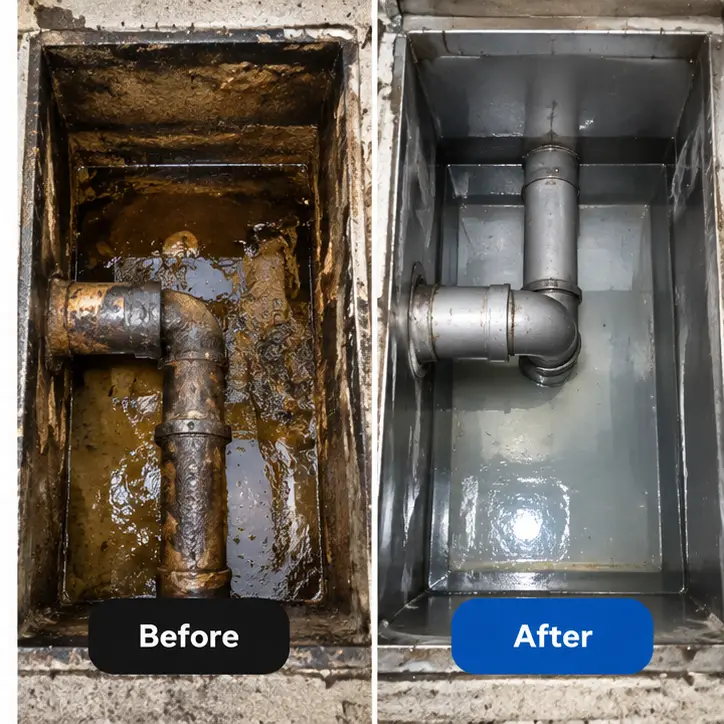
The trap is cleaned and degreased. Holes and cracks are repaired and broken walls rebuilt. Then the whole trap is coated, with materials certified to NSF/ANSI 14 and 61. It’s ready the next morning.
5. The two promises start
The repaired trap is guaranteed to pass inspection, and it carries a 10-year warranty covering labor and materials, as long as the trap gets regular pump-outs.
Is the trap damaged, or does it just need a pump-out?
Not every grease trap problem is a repair job. Before you call anyone, work out which kind you have.
| Usually a full trap or a blocked line | Signs of damage to ask your hauler about |
|---|---|
| Sinks and floor drains emptying slowly | Cracks, holes, corrosion or a broken baffle wall |
| A rotten or sour smell near the drains | The water level falling while nothing is draining into it |
| Water coming up through the lid or out of the drains | A lid that no longer seals, or crumbling concrete inside |
A full trap needs a pump-out from a permitted liquid waste hauler. Austin Water’s advice is to be there for pump-outs and ask your hauler about the condition of the trap. Ask them to tell you if they see damage while it’s open, and don’t open or go into the trap yourself to look.
The Austin rule behind this
Austin’s code asks for more than pump-outs. Restaurants, bakeries, schools, hospitals, grocery stores and every other commercial or institutional food preparation business must “construct, operate, and maintain” an approved pretreatment facility. For a kitchen, that pretreatment facility is its grease trap. Austin’s code also caps fat, oil and grease in wastewater at an instantaneous maximum of 200 milligrams per liter (§ 15-10-23).
“A person operating a commercial or institutional food preparation business, including a food processor, bakery, restaurant, school, hospital, retirement home, assisted living center, grocery store or other commercial or institutional food preparation operation must construct, operate, and maintain a pretreatment facility approved by the director.”
— Austin City Code § 15-10-71
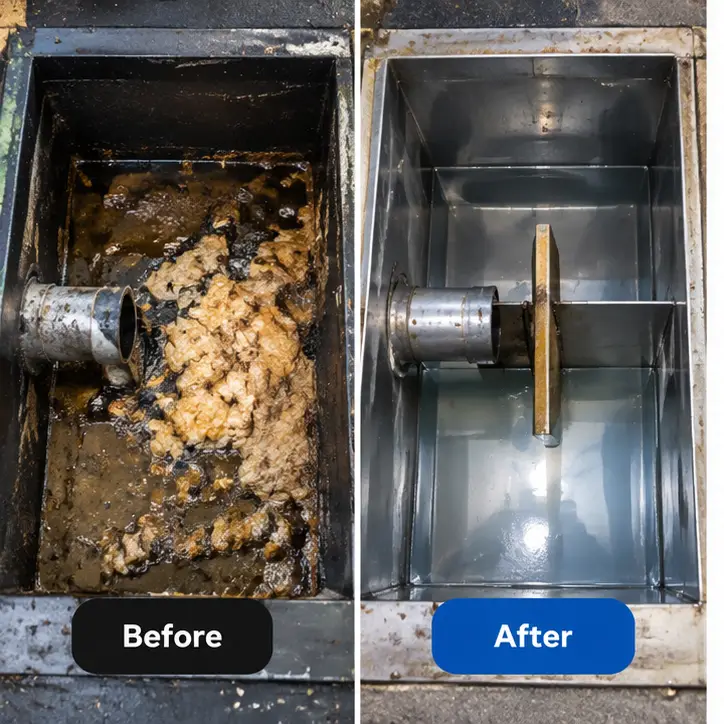
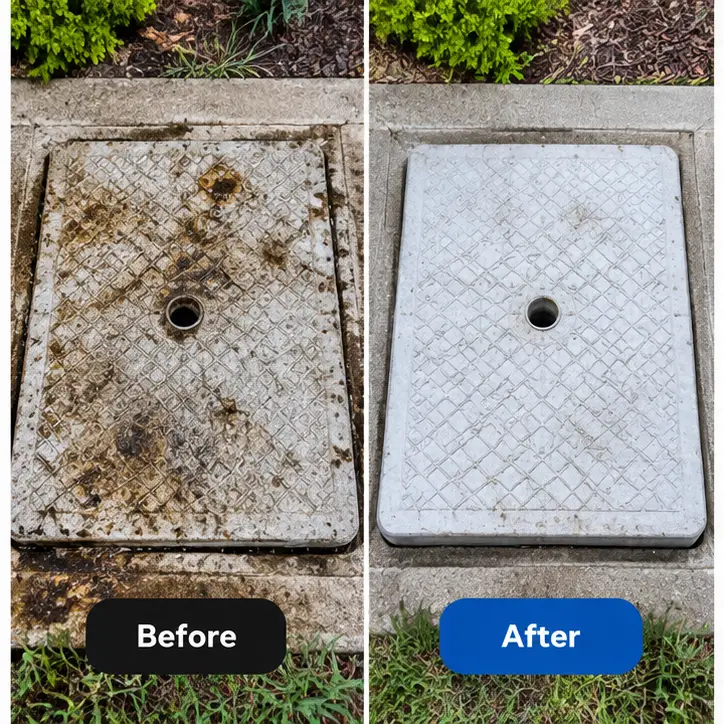
Before and after a coating repair
Questions about repairing a grease trap
How long does a grease trap repair take?
One night. The work is done after you close, and the trap is ready the next morning, whatever its size.
What is grease trap coating?
It’s the name for the repair method. The trap is cleaned and degreased, the holes and cracks are repaired and broken walls rebuilt, and then the whole trap is coated. You may also hear it called lining or relining.
Can a broken baffle wall be fixed without replacing the trap?
Yes. We rebuild broken baffle walls in the existing trap.
How is the inspection guarantee met?
By repairing the trap with high industrial-grade materials, back to its original specifications, and by working with the city’s inspectors on any inspection that’s needed.
What does a repair cost?
We don’t publish prices. The cost depends on the size of the trap and the amount of damage, and a free on-site inspection works it out. A repair typically costs under half as much as replacing the trap.
Does a repaired trap still need pump-outs?
Yes. Austin’s cleaning rule still applies to it, and the 10-year warranty stays valid as long as the trap gets regular pump-outs.
Open 24/7
Cracked, leaking or just failed? Ask about repair before you replace.
Call (512) 801-4131 at any hour, and a person will answer. Or send a message with what you’ve found.