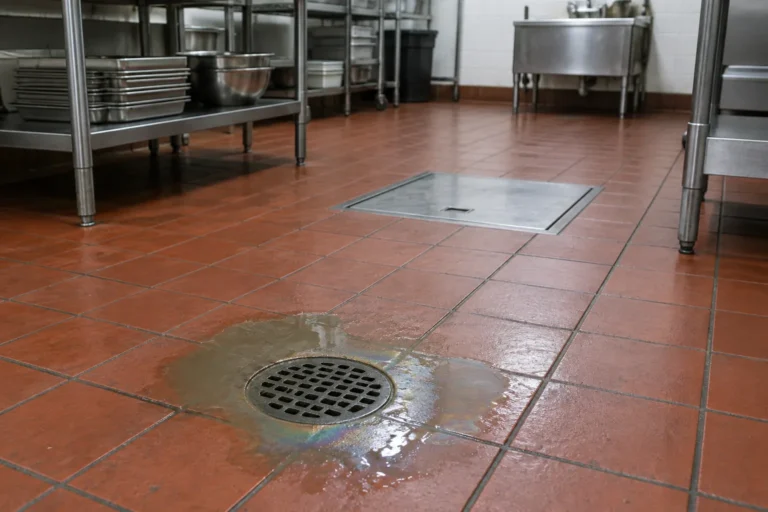
How to Fix Grease Trap Problems: Full, Blocked or Damaged?
The right fix depends on what is actually wrong with the trap, and in a commercial kitchen in Austin it is rarely a job
The right fix depends on what is actually wrong with the trap, and in a commercial kitchen in Austin it is rarely a job
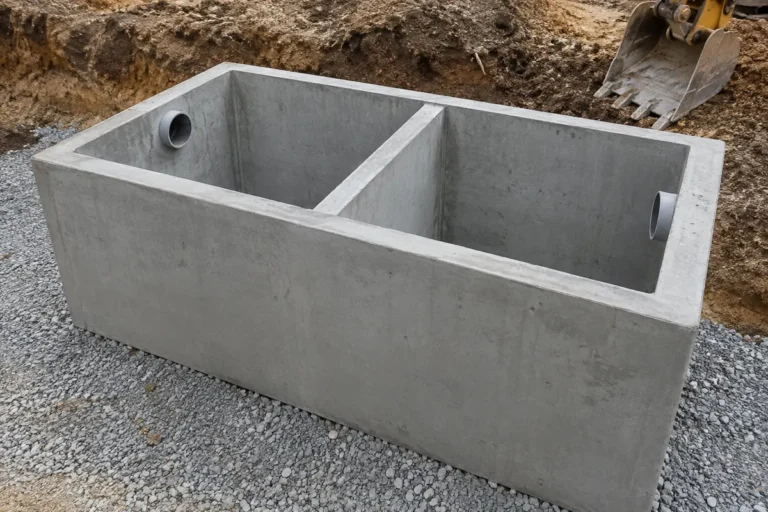
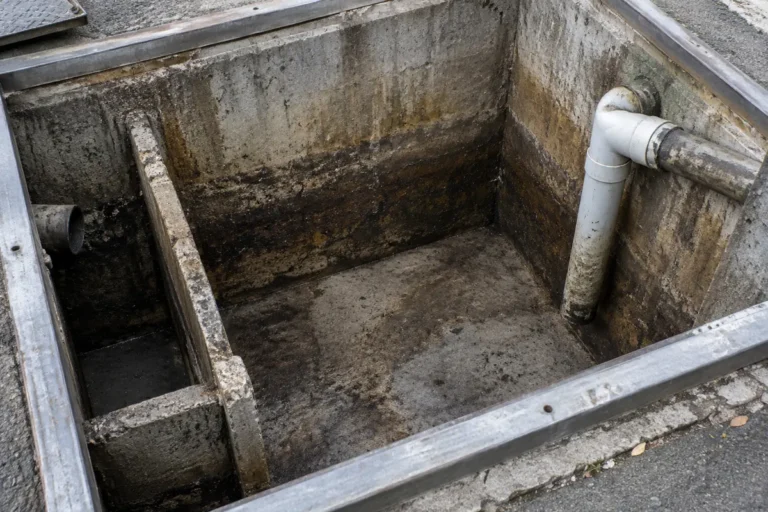
A large commercial grease trap is a tank, usually precast concrete and sometimes steel, fiberglass or plastic, with a baffle wall dividing it into
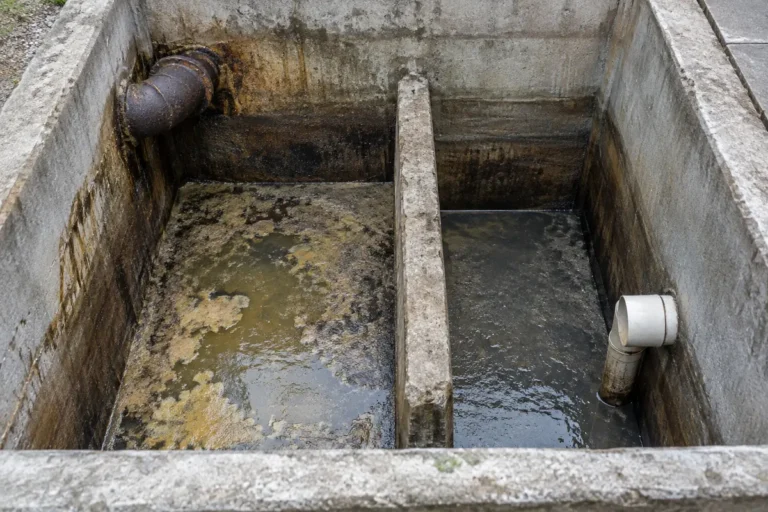
The inlet pipe is how your kitchen’s wastewater gets into a grease trap, and the outlet pipe is how the separated water leaves for
A grease trap outlet tee is the T-shaped fitting on the way out of the trap, with a leg that reaches down into the
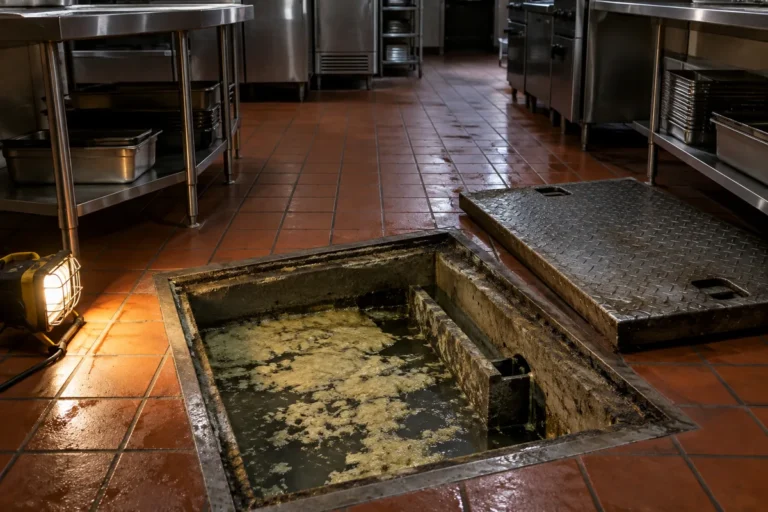
Restaurants, cafés, and other commercial kitchens produce wastewater containing fats, oils, food particles, and cleaning residue. As this material passes through drainage equipment, some
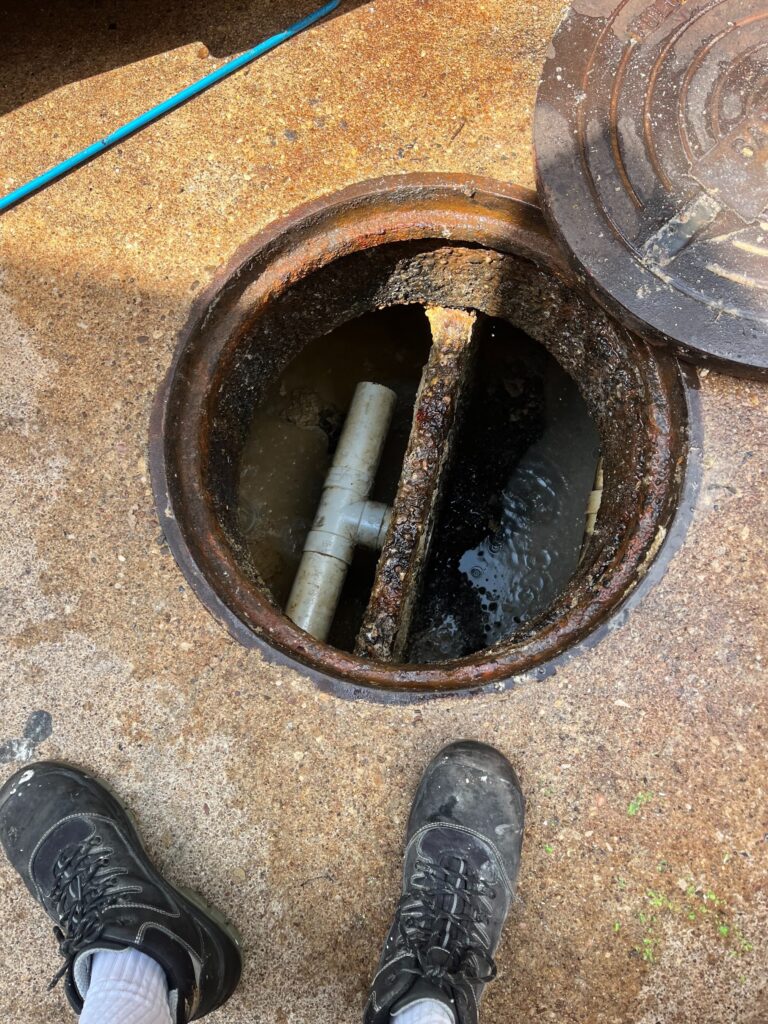
Commercial kitchens rely on effective drainage systems to manage wastewater from cooking, cleaning, and dishwashing. Over time, grease, food particles, and regular equipment use
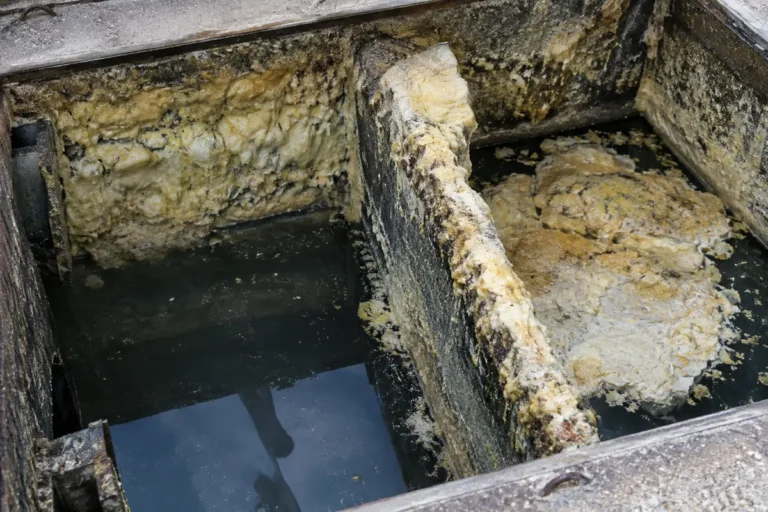
Commercial kitchens handle cooking oil, food scraps, and wastewater throughout the day, allowing grease to collect inside drainage systems over time. Without proper maintenance,
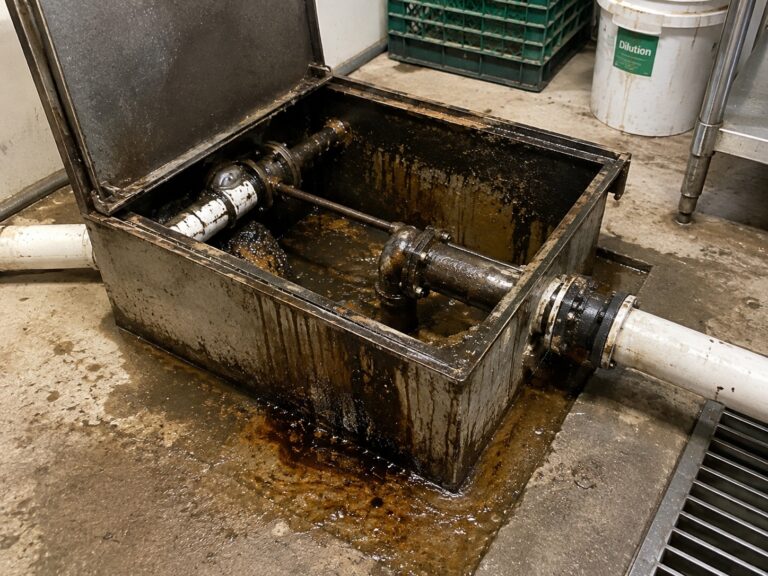
Commercial kitchens rely on grease traps to manage wastewater produced during cooking, cleaning, and food preparation. Over time, fats, oils, grease, and food particles
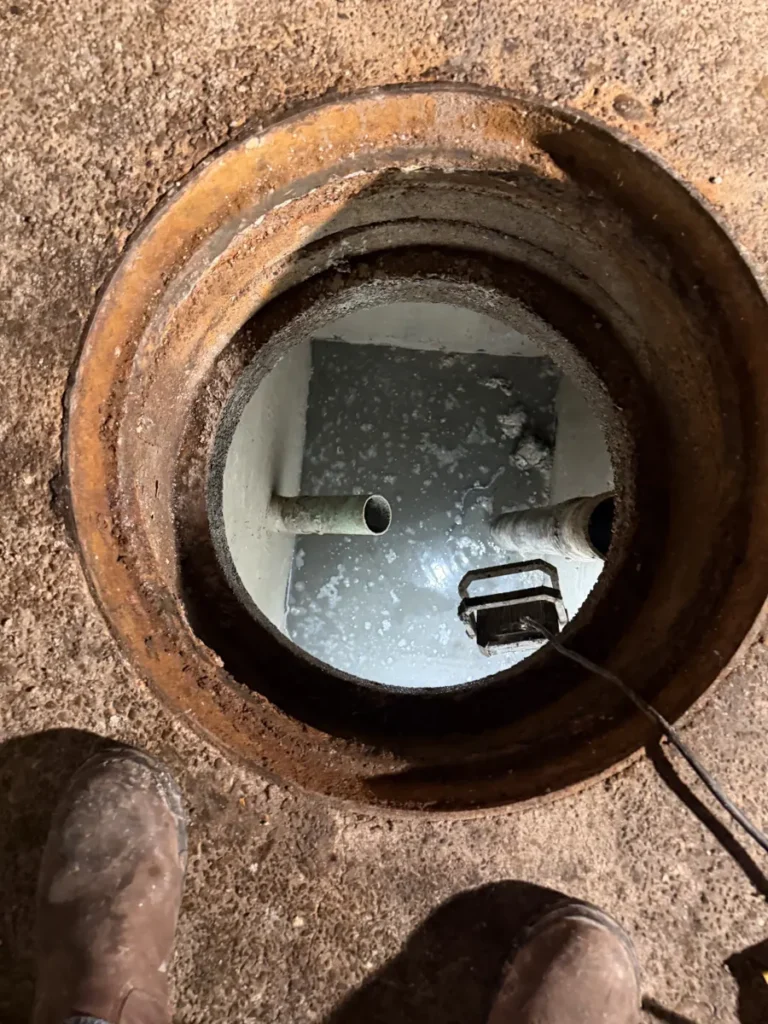
How does a grease trap work? Follow kitchen water from sink to sewer, learn each part by name, and see what Austin expects when a trap fills or breaks.
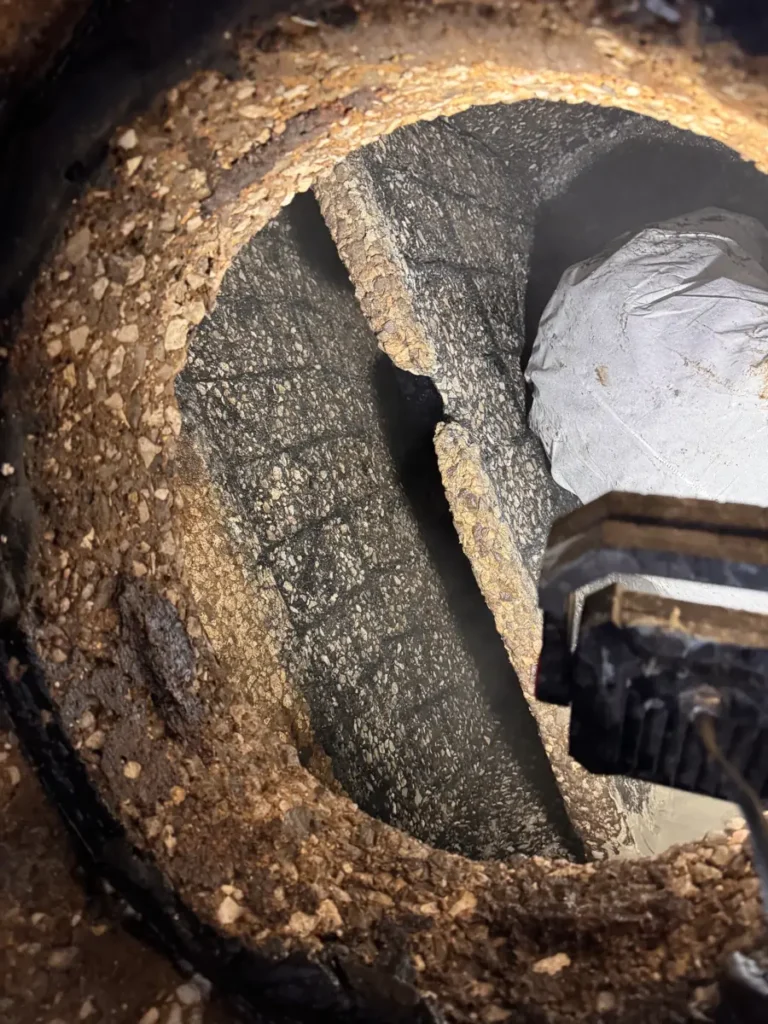
A grease trap baffle wall keeps floating grease away from the outlet. How baffles break, what Austin’s rules require, and why most can be rebuilt.
Call any time, day or night. A technician looks at the trap on site, and the inspection is free.