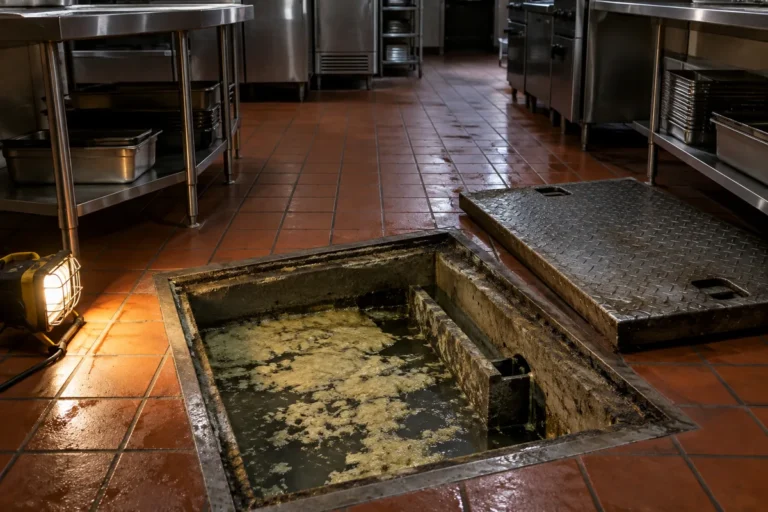
How to Fix Grease Trap Problems: Full, Blocked or Damaged?
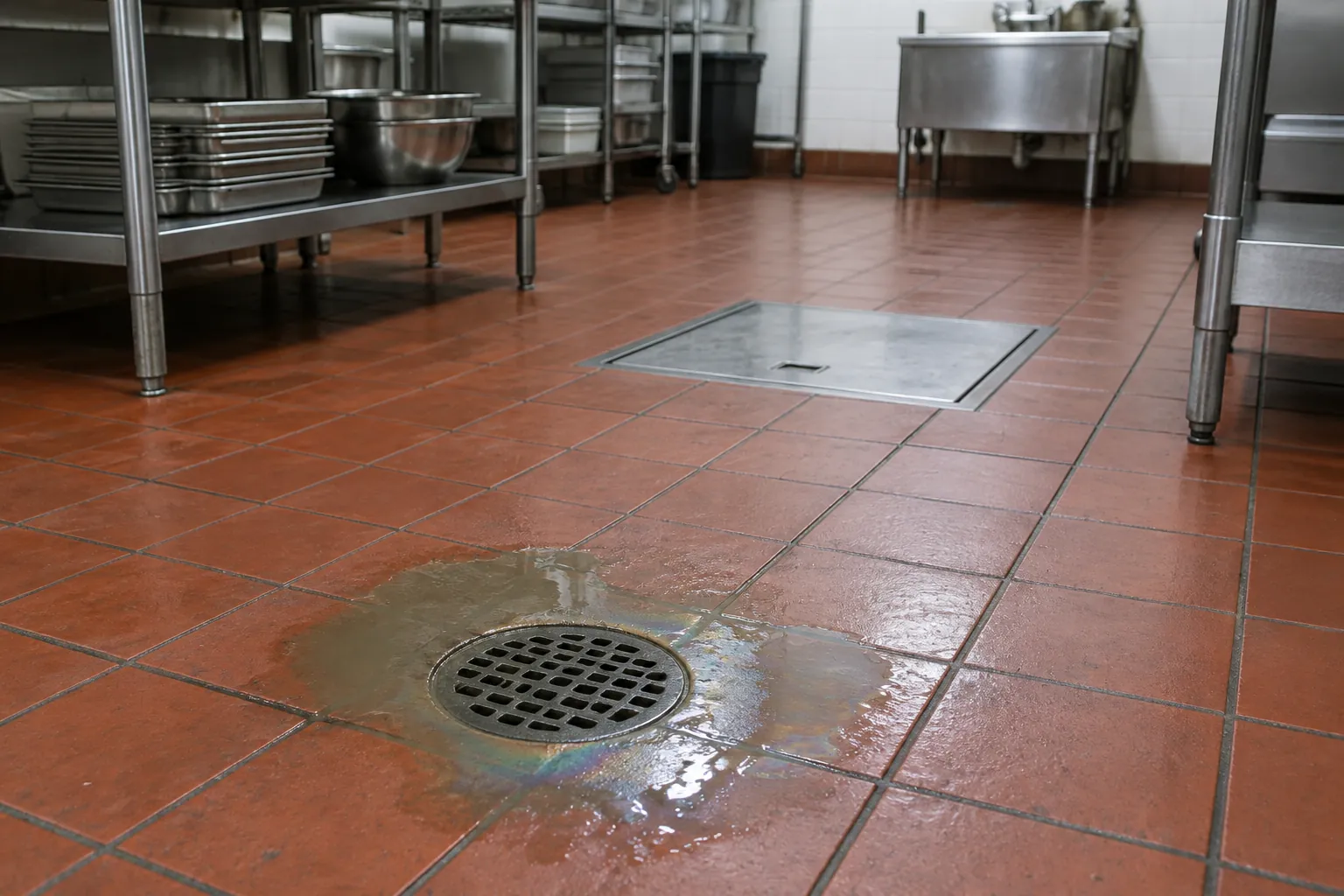
The right fix depends on what is actually wrong with the trap, and in a commercial kitchen in Austin it is rarely a job for your own staff. A full trap needs a pump-out by a liquid waste hauler with a City of Austin permit. A blockage in the pipe before or after the trap is what jetting is for. Cracks, a broken baffle wall or a failed fitting need a repair, and no product poured down the sink fixes any of them.
Scoop-it-out guides written for small under-sink traps don’t carry over to Austin. There, § 15-10-197 has every business whose grease trap drains to the City’s sewer “use a liquid waste hauler permitted by the director to remove the grease trap waste”. The section makes no exception for small traps. We repair grease traps and don’t pump them, so this guide sorts each problem by who should fix it, including the ones that aren’t ours.
How to fix a grease trap: start with the symptom
| What you or your hauler sees | What it can point to | Who fixes it |
|---|---|---|
| Sinks and floor drains running slow or a sewage smell, and the pump-out is due or overdue | A full trap | Your pumping company, a liquid waste hauler with a City of Austin permit |
| Backups that return soon after a fresh pump-out | A blockage in the line on either side of the trap, or a missing inlet tee inside it | Us: sewer line jetting for the line, a repair for the trap |
| At a pump-out or an inspection: cracks, holes, a broken baffle wall, a broken or missing T-pipe, a lid that no longer seals, or a water level that is unexpectedly low or dropping | Damage to the trap | Us, for a repair after a free on-site inspection |
| At a pump-out or an inspection: grease set hard on the walls, baffle and pipes | Heavy build-up | Us, for deep cleaning and degreasing |
| Grease reaching the sewer past a trap that is pumped on time and in good shape | A cause in the kitchen, such as a fixture that bypasses the trap | A plumber, plus changes to kitchen habits |
The signs in the first column come from trade guides and EPA training material, not from a City checklist, so treat them as pointers and let the hauler or a technician confirm. Start with the pump-out date. If the trap is overdue, have it emptied first, because every other problem on this list is easier to judge in an empty trap.
How to fix a grease trap that is simply full
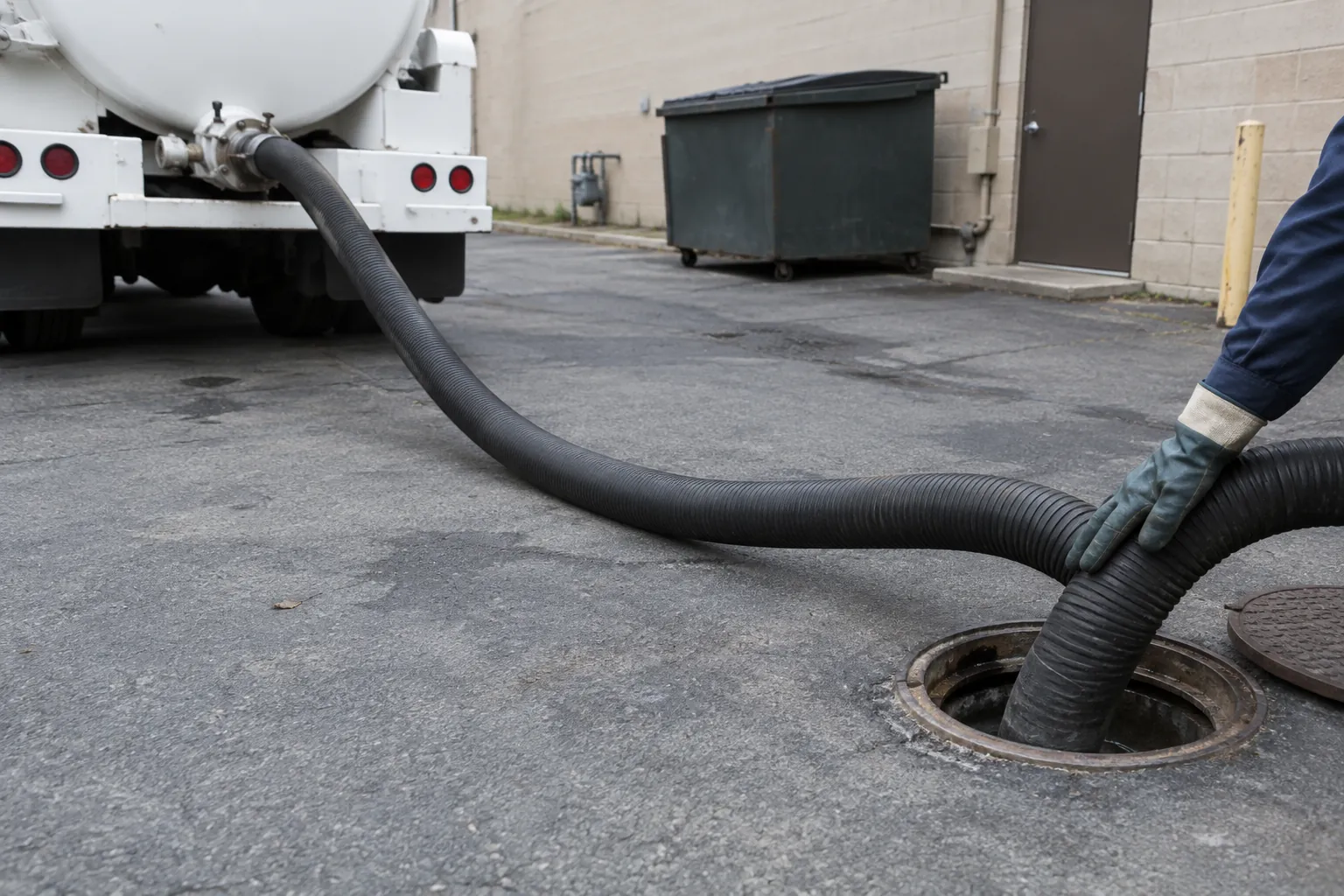
Austin’s code sets two deadlines, and the earlier one wins. Under § 15-10-197, a trap must be cleaned “at least every ninety days”, or sooner once grease and solids reach half of its wetted height. The code measures that height “from the bottom of the grease trap to the invert of the outlet pipe”. The invert is the lowest inside edge of the pipe the water leaves by.
Past either point, the fix is a pump-out by your pumping company, which in Austin must be a permitted liquid waste hauler (§ 15-10-197). That is not our job: we don’t pump traps or haul waste. If you need a hauler, Austin Water’s Grease Trap Maintenance page links its words “liquid waste hauler with a valid City of Austin permit” to the City’s list of permitted haulers.
How can I tell whether the trap is simply full?
Check the date of the last pump-out on your hauler’s manifest, the record the hauler hands over after each service. Under § 15-10-165, you keep records “for at least three years from the date the record is created”. Austin Water’s FAQ also says to “Ask your maintenance provider to take periodic grease and sludge layer measurements to determine the appropriate schedule.”
If the slow drains and the smell come back within days of a complete pump-out, the trap wasn’t the whole story. The next sections cover the other causes.
How to fix grease trap lines that are blocked
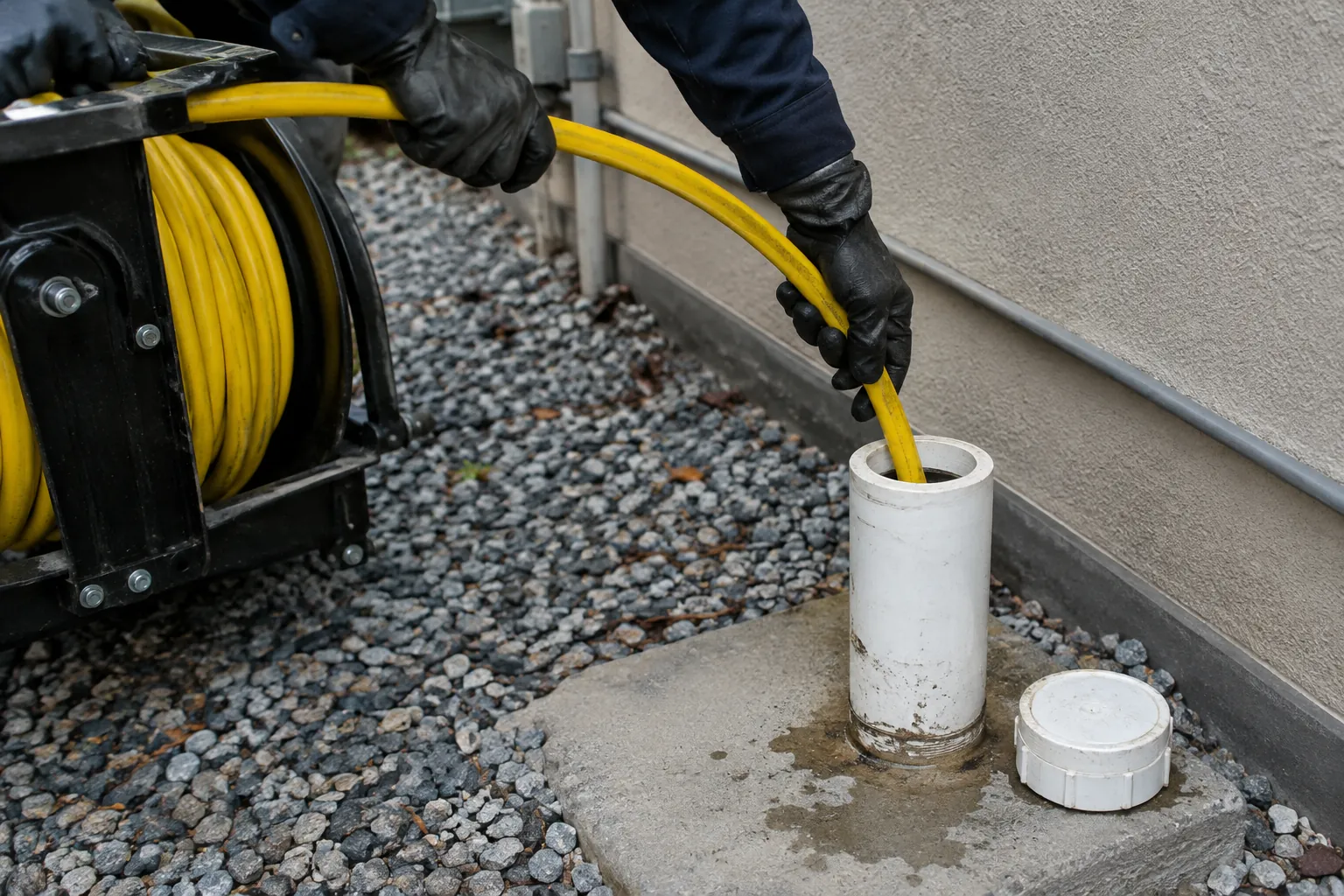
When the trap has just been emptied and water still backs up, the cause can sit in the pipes or in the trap. A blockage can form in the line that carries water from the kitchen to the trap, or in the line that carries it on to the sewer.
That is what our sewer line jetting is for. Jetting works on the pipe, not the tank: it clears blockages in the line up to 200 feet from each side of the trap, kitchen side and sewer side.
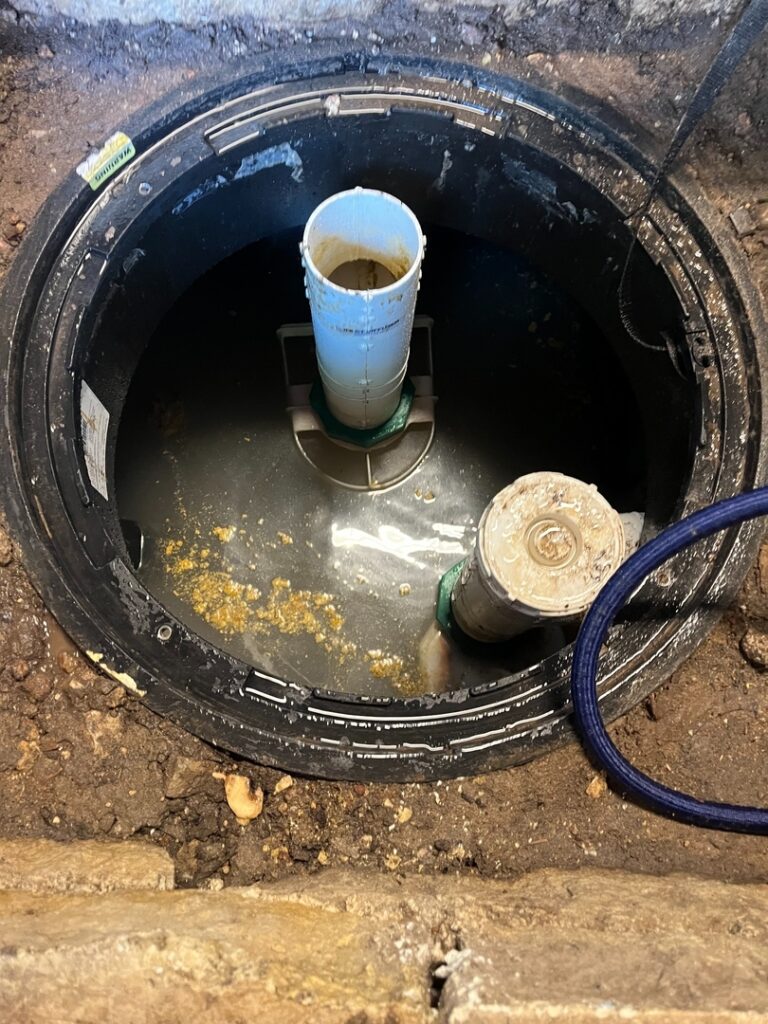
The cause can also be inside the trap. EPA’s Fats, Oils and Grease webinar slides list what follows when an inlet tee is missing, including “Clogs, backups in facility are more likely”. A missing tee is a repair, covered in the next section.
How to fix a grease trap with cracks, broken walls or failed fittings
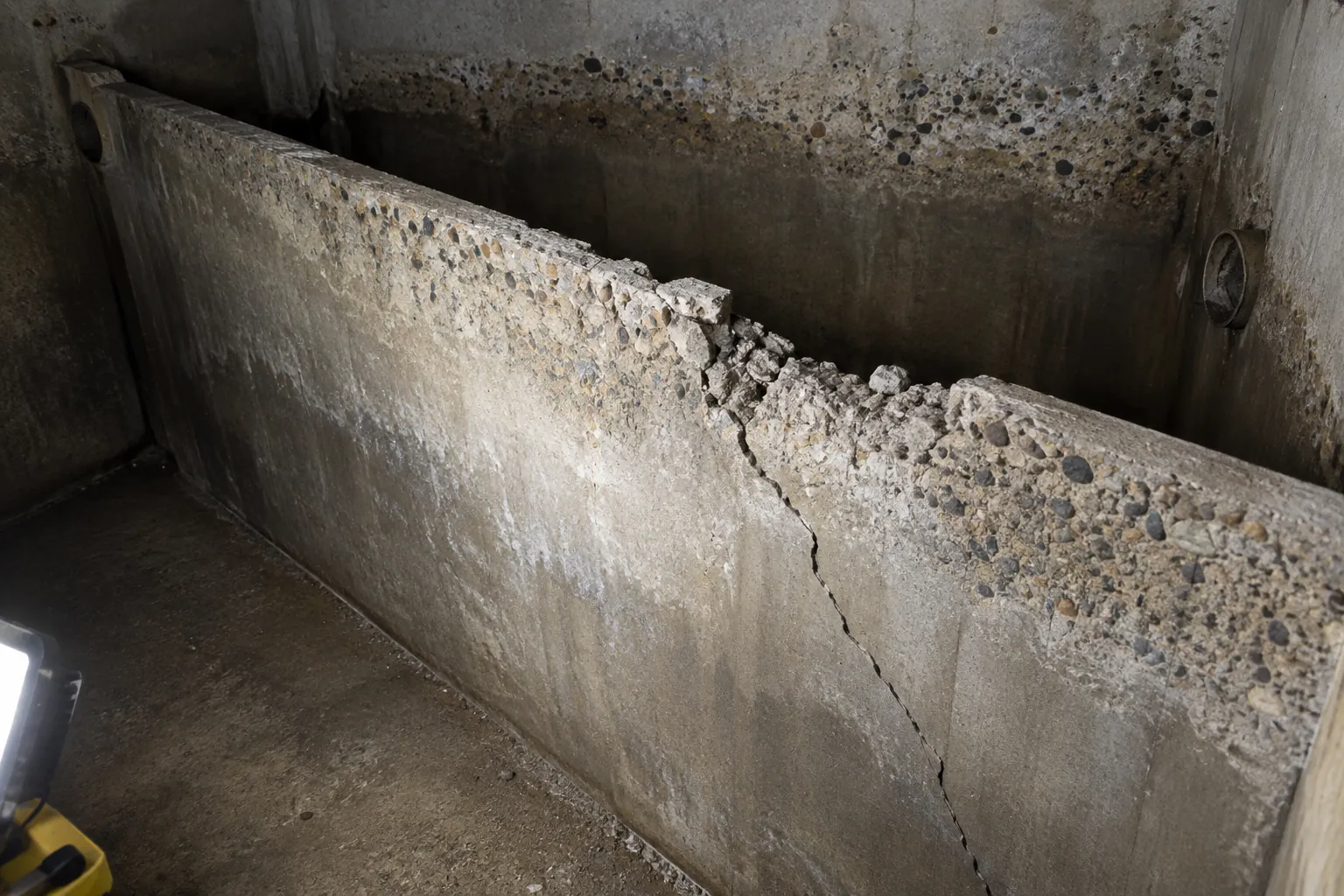
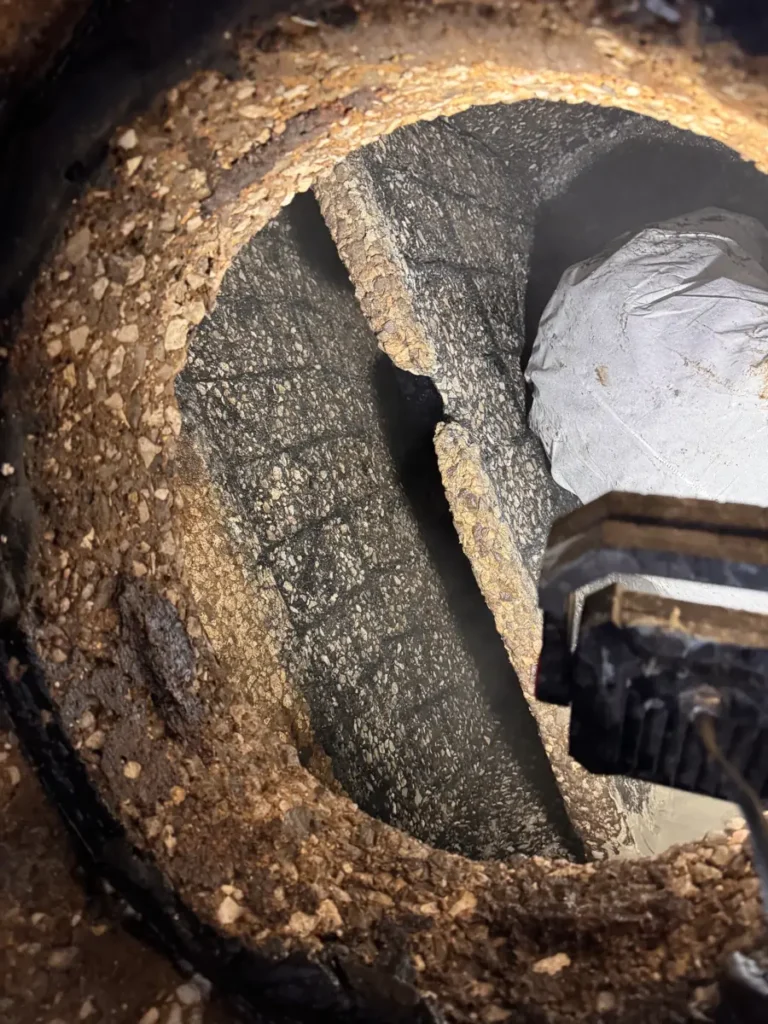
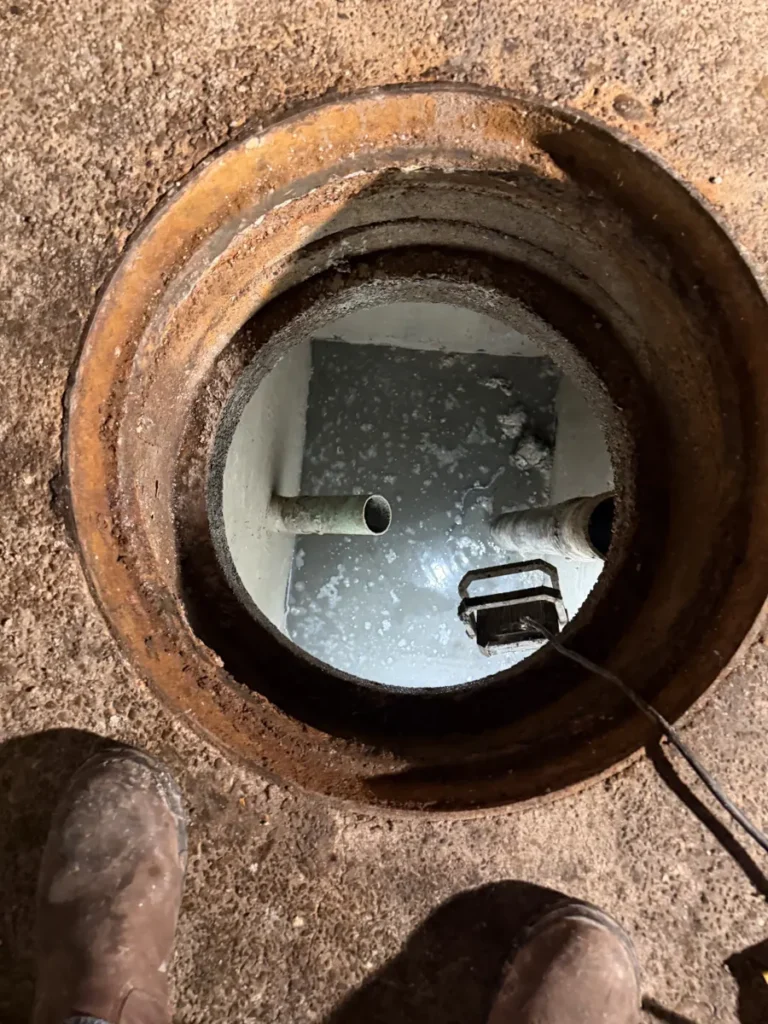
A pump-out empties a trap; it doesn’t mend one. Trade guides read these as damage rather than a missed pump-out: visible cracks or corrosion, holes, and a lid that no longer seals. The same guides read an unexpectedly low or dropping water level as a sign of a leak rather than a full tank. Your hauler is the person most likely to spot them, because the trap is open and empty at a pump-out.
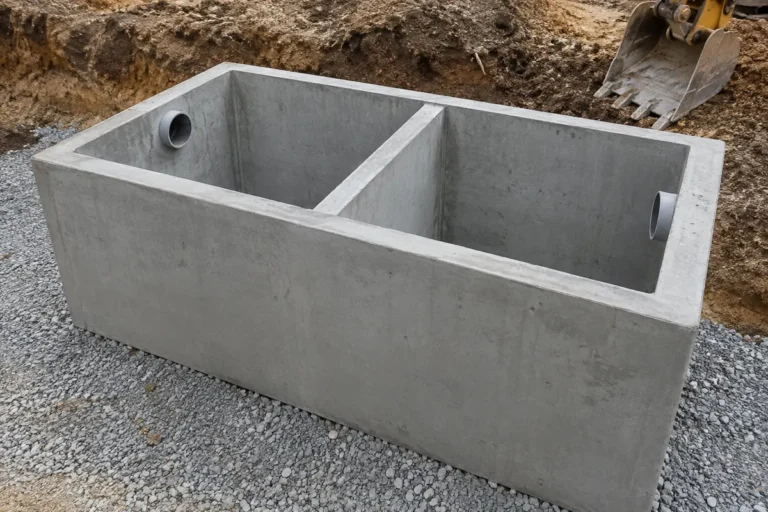
Two parts inside matter most. The baffle wall keeps floating grease in the first compartment, so once it breaks, grease can ride through to the outlet. The tees, T-shaped fittings on the pipes, are flagged in EPA’s Fats, Oils and Grease webinar slides: “No Inlet Tee is a problem” and “Outlet Tee is critical”.
Corrosion can cause this kind of damage. EPA’s 1991 report on sewer corrosion describes hydrogen sulfide from decaying waste turning into acid on damp surfaces above the water in sewers, where it eats concrete; EPA wrote it about sewers, not grease traps. If water is getting out of the trap, see why a grease trap leaks.
Damage is the work we do. We repair cast concrete, steel and fiberglass traps of all sizes: holes and cracks, broken baffle walls, inlet and outlet pipes and T-pipes. If a pipe or T-pipe is completely gone, our crew fits a new one. Your pumping company empties the trap first. Our crew then works overnight, after you close, and the trap is ready the next morning.
A repair typically costs under half as much as replacing the trap. Every repair also carries a 10-year warranty on labor and materials, as long as the trap gets regular pump-outs. It starts with a free on-site inspection; see grease trap repair in Austin.
How to fix a grease trap caked with hardened grease
Grease set hard on the walls, the baffle and the pipes is something your hauler sees at a pump-out, or a technician sees at a free on-site inspection. For that, we offer deep cleaning and degreasing of the trap itself. Your permitted pumping company empties the trap and takes the waste away; we don’t haul it. Deep cleaning doesn’t take the place of your regular pump-out. It is also the first step of every repair we do, so a trap that’s being repaired gets it anyway.
When fixing the grease trap won’t fix the problem
A repair mends the trap; it can’t stop grease that never goes through it. In a field case in EPA’s Fats, Oils and Grease webinar slides, a large interceptor with proper tees and baffle wall, pumped on a short schedule, still sent heavy grease into the sewer. EPA’s next step: “Time for dye test of kitchen fixtures.” In other words, find what drains around the trap.
Austin Water’s design rules say “All fixtures with the potential to carry grease-bearing wastewater or solids must be plumbed to the grease trap or interceptor.” Two more kitchen causes are worth asking about:
- The dishwasher. In a second case in the same slides, a dishmachine connected to the trap was one of three faults; the slide names its high temperatures, detergents and high flow rate. Austin plans for this at design: a kitchen with a dishwasher “must install a minimum 500-gallon (liquid holding capacity) grease interceptor”. If one was added after the trap was sized, ask Austin Water’s Industrial Waste staff whether the trap still fits the kitchen.
- Food grinders. Austin Water says never to use them, “as these have been prohibited in commercial kitchens in the Austin Water service area since 2008.”
Why enzymes, chemicals and hot water don’t fix grease trap problems
Products sold to dissolve grease move it along rather than remove it. Austin Water’s maintenance page: “Never use enzymes, bacteria and/or other agents that would cause the contents of a GT to pass through the pretreatment device rather than be retained” (§ 15-10-22(23)). GT means grease trap. The same page gives the reason: “While these substances will temporarily help liquify FOG, it will re-congeal further down in the pipes.” FOG is fats, oils and grease.
Austin Water’s design criteria also list the signs that an agent added to the drains is interfering with the trap, among them that “free-floating oil or grease appears downstream of the grease trap”.
Hot water does the same for a while. In our reading of EPA’s dishmachine case and Austin Water’s warning, grease carried through by hot water sets again as it cools further down the line.
Before you decide how to fix a grease trap: what you can safely check
You can narrow the problem down without opening anything:
- The last pump-out. Find the date on the most recent manifest.
- What the hauler wrote. Austin Water’s advice, when a manifest “indicates that the GT needs repair, take appropriate action to have it serviced immediately.”
- Which drains are slow. Note whether it’s one sink or the whole kitchen, and tell whoever you call.
- When it started. Trouble that returns within days of a complete pump-out isn’t a full trap.
- The next pump-out. Austin Water’s tip: “Be present for GT pump-outs and talk to your liquid waste hauler (LWH) about the percentage of grease and solids in the interceptor as well as the condition of the pretreatment device itself.”
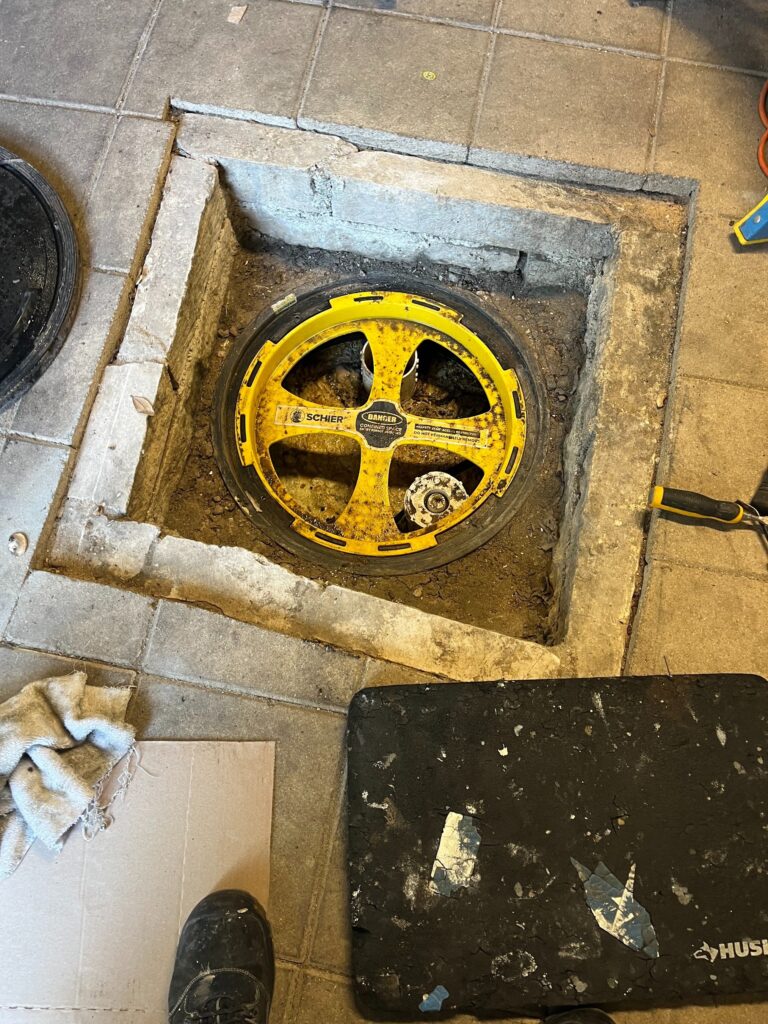
Don’t let staff lift the lid, reach in or climb into an in-ground trap. EPA’s Fats, Oils and Grease webinar slides warn inspectors that “Manholes are a confined space!” and name hydrogen sulfide and methane among the dangerous gases. In our reading, an in-ground trap’s lid opens onto the same kind of space.
More questions on how to fix a grease trap
Can my staff fix the grease trap themselves?
Not the emptying: in Austin, § 15-10-197 gives removing the waste to a permitted liquid waste hauler, and it makes no exception for small traps. EPA’s webinar slides warn that manholes are a confined space, and in our reading an in-ground trap’s opening is the same kind of hazard. Staff can keep grease and food scraps out of the sinks, keep the manifests on file, and keep the lid clear. Austin Water asks you to make sure the trap “remains accessible including regularly checking that lids aren’t blocked”.
Will a pump-out fix a cracked or broken trap?
No. It empties the trap, and the cracks, the broken baffle wall or the missing tee are still there afterward. A pump-out is still the first step, because a repair can only start once the trap is empty.
Is replacing the trap ever the right fix?
Sometimes. If the tank is beyond repair, or too small for the kitchen it now serves, a new trap is the honest answer, and we install new traps too. For a new trap, Austin Water’s sizing page says: “Do not purchase a grease trap or interceptor before obtaining building plan approval and an Industrial Waste approval letter specifying the required size and design.” How that applies to your replacement is a question for Industrial Waste staff.
Who decides whether my trap meets Austin’s rules?
The City does, through Austin Water’s Industrial Waste staff. Questions about your schedule, your permit or an inspection result go to them. For the rules in one place, see the City of Austin grease trap requirements.
Sources
- Austin Water, Grease Trap Maintenance (retrieved October 2026)
- Austin Water, Grease Trap Sizing & Design Criteria (retrieved September 2026)
- Austin Water, Pretreatment Requirements and Resources FAQ (retrieved September 2026)
- Austin City Code, Chapter 15-10, Wastewater Regulations: § 15-10-22(23), § 15-10-165 and § 15-10-197 (Municode, version of August 26, 2026, read November 2026)
- U.S. EPA, Fats, Oils and Grease webinar slides (PDF) (NPDES Operator Webinar, October 2023)
- U.S. EPA, Hydrogen Sulfide Corrosion in Wastewater Collection and Treatment Systems, Report to Congress (1991)
Updated November 2026
Still not sure how to fix a grease trap in your kitchen?
If the trap is overdue, call your pumping company first. If it has been pumped and the problem is still there, or the hauler has noted damage, call (512) 801-4131. We’re open 24/7, a person answers, and we’ll book a free on-site inspection to tell you whether it’s the line, the trap or neither.